About the project
The Opera Omnia project of St. Thomas Aquinas aims to publish approximately one hundred works by Aquinas whose authenticity has been confirmed (the project does not include the publication of translations of works whose authorship is subject to reasonable doubt). The work is planned as a translation, editing, and publishing process lasting several years.
Description of the project
For many centuries, the texts of St. Thomas Aquinas were read in the original Latin. The gradual decline of Latin meant that Thomas's works became practically inaccessible even to many educated readers, which created a need for translations into modern languages. Due to the size of the task, it was mostly undertaken by monks, most often Dominicans, with financial and academic support from lay collaborators and foundations established for this purpose (e.g., Die Deutsche Thomas Ausgabe in Germany). In the 20th century, French, English, German, and Italian translations were published.
Thomas Aquinas
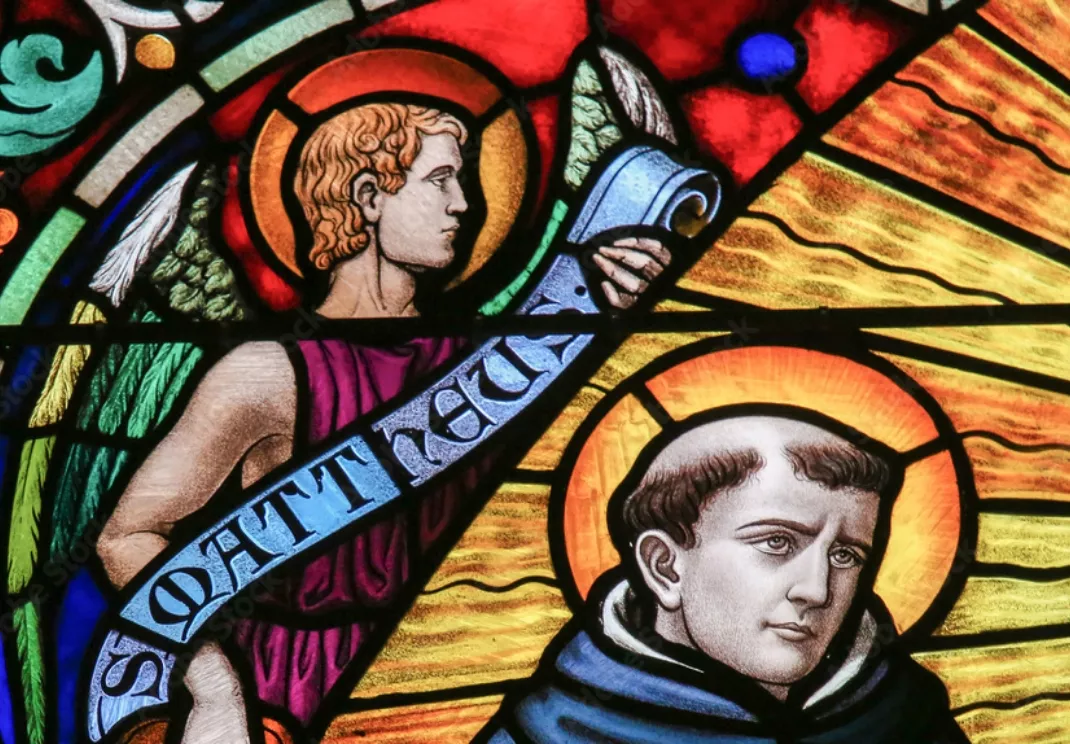
Thomas Aquinas (1225–1274) is undoubtedly one of the most outstanding thinkers of the West, who shaped theological and philosophical thinking in our civilization for many centuries. He was born around 1224 in his parents' castle in Roccasecca in southern Italy. Raised by Benedictines at Monte Cassino, he joined the Dominican Order, which had been founded several decades earlier. After a period of formation, he took up a position as a lecturer. He worked in Cologne, Paris, and university towns in Italy, among other places. He died in 1274 on his way to the Council of Lyon. He was canonized in 1323.
Cytat
Człowiek z zepsutym smakiem nie wydaje słusznego sądu o potrawach, ale do rzeczy smacznych czuje niekiedy wstręt, z kolei zaś ma apetyt na rzeczy wstrętne. Natomiast człowiek ze zdrowym smakiem wydaje słuszny sąd o potrawach. Podobnie człowiek, którego postawa jest zepsuta, jako, że ukształtowała się na wzór rzeczy świeckich, nie wydaje słusznego osądu na temat dobra.
(In Rom, cap. XII, lect.1 (nr 967)